
Introducing Status Page Components
Jan 30, 2026 | by Maximilian Kaske | [company]

Status pages started simple for us: a page showed the uptime of a monitor. That assumption shaped our entire data model - and eventually became our biggest limitation.
We embraced this tight coupling early on because it let us move fast. The downside? It made us move slow when requirements evolved.
Over the year, we've received requests from users wanting to share status reports without any uptime monitoring attached. We tried addressing this with the page.configuration object - you could choose between bar type, card value, and showing uptime - but that was us duct-taping a more fundamental problem: status page components were tightly coupled to monitors.
The Solution
From the ground up, we've reworked the relationships between status reports, maintenances, pages, and monitors. The result: page components - a flexible new architecture that decouples status pages from monitors.
┌──────────────────────────────────────────────────────────────┐
│                 BEFORE (monitors_to_pages)                   │
└──────────────────────────────────────────────────────────────┘

  incidents ───▶ monitors ◀─── maintenances
                    │     ◀─── status_reports
                    │
                    ▼
            monitors_to_pages (m-to-m)
                    │
                    ▼
                  pages


┌──────────────────────────────────────────────────────────────┐
│                  AFTER (page_components)                     │
└──────────────────────────────────────────────────────────────┘

  incidents ───▶ monitors
                    │
                    │ (optional)
                    ▼
            page_components ◀─── maintenances
                    │       ◀─── status_reports
                    ▼
                  pages
Component Types
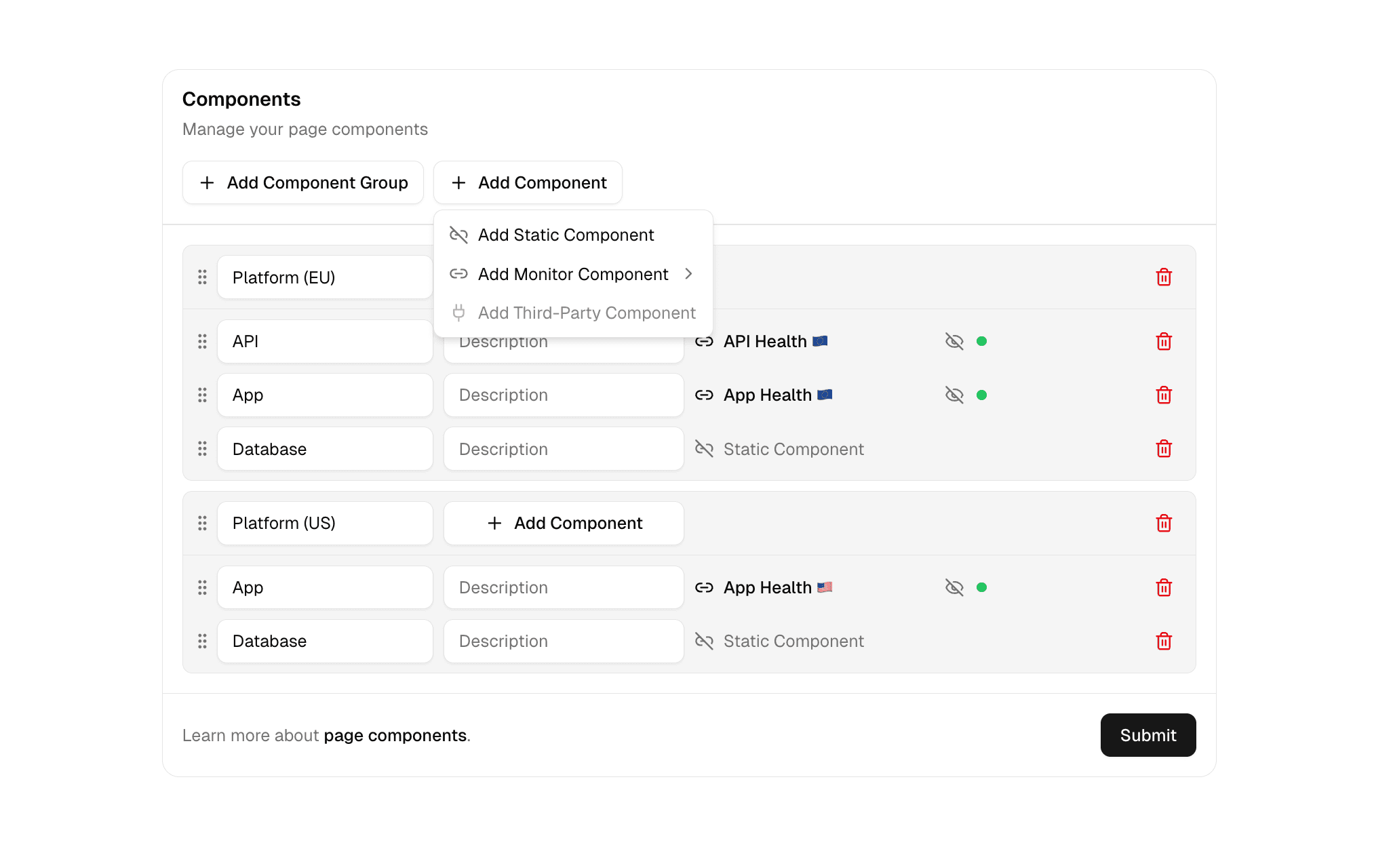
A page component has a type that determines its behavior:
- static: zero dependency on any uptime data—simply shows values based on connected status reports or maintenances
- monitor: acts just like before where uptime data can be tightly linked to our monitoring system (see
page.configurationfor more)
Future Types
These types can be extended. We see third-party as a big third pillar where status updates from third-party services can be displayed in near real-time. Feel free to reach out to us if you're interested in those components.
Key Benefits
This architectural change brings several advantages:
- Flexibility: Status pages are no longer limited to monitored services—share status updates for any component, monitored or not
- Simplified self-hosting: Self-hosters can create status pages without setting up a full monitoring infrastructure
- Future extensibility: The component-based architecture makes it easy to add new types like third-party integrations
- Better separation of concerns: Monitoring and status reporting are now properly decoupled, allowing each to evolve independently
Pricing and Plan Limits
Page components are counted across your workspace based on your plan tier:
- Hobby (free): 3 components
- Starter: 20 components
- Pro: 50 components
The flexibility of static components means you can now maximize your plan limits more effectively. Previously, every component required a monitor (which counts against your monitor limit). Now you can:
- Use monitor-type components for services you want to actively check
- Use static components for third-party dependencies, managed services, or components you update manually
- Mix both types to get full visibility without needing a monitor for everything
Migration Approach
Our strategy was to sync the legacy database while incrementally migrating every part of our stack:
- database migration + setup syncing between
monitors_to_pagesandpage_componentstables - status page
- status reports and maintenances
- dashboard form
- status report emails
- ...
This allowed us to step by step test and merge changes to production without having to pause the migration.
API Compatibility
For existing integrations, the v1 API maintains backward compatibility. Status page responses continue to include the legacy monitorIds and monitors fields to prevent breaking changes. However, these fields now only return page components of type monitor - the static components are excluded from these legacy fields.
Looking ahead: Future API versions will use the pageComponents structure as the primary interface. Thibault is already cooking our v2 API version including an SDK to improve the DX around openstatus!